
Loading...
Serving Kaneohe, HI and surrounding areas. (808) 444-0878
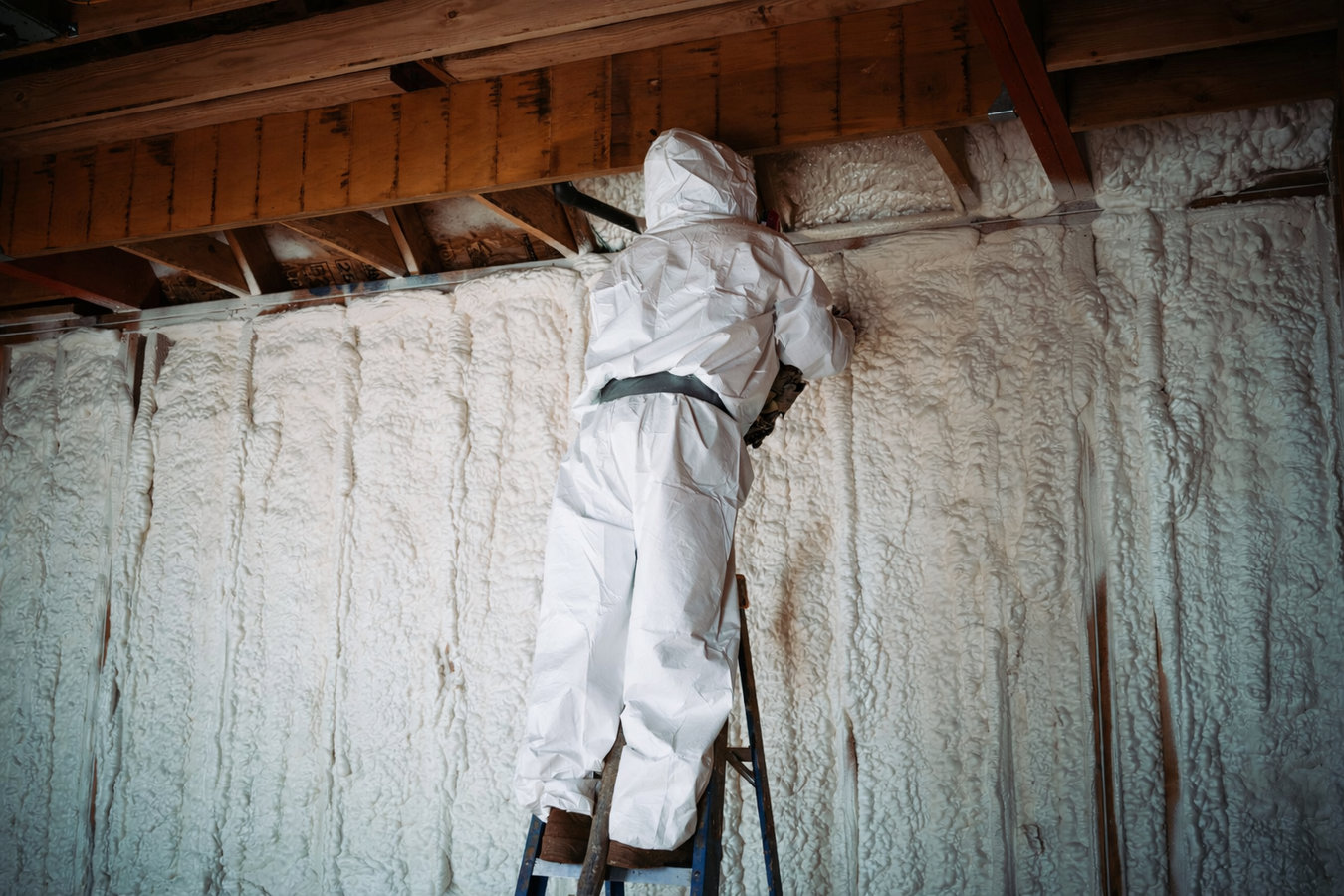
Windward Oahu homes fight humidity and high energy bills every day. Closed-cell foam seals the gaps that let both in, so your AC can finally keep up without running constantly.
Closed-cell foam insulation in Kaneohe is a spray-applied material that expands on contact and hardens into a dense, rigid barrier, sealing air and moisture out at the same time, with most residential jobs completed in one to two days depending on the areas being treated.
Unlike fiberglass batts, which slow heat and can absorb moisture over time, closed-cell foam blocks moisture vapor from passing through it at all. In a place like Kaneohe - where the windward climate means your home's walls, attic, and crawl space are under constant pressure from humid air - that difference matters. Older homes especially, many of which were built in the 1950s and 1960s without today's insulation standards, are leaving a lot of cooling efficiency on the table.
Closed-cell foam is frequently chosen for attics and crawl spaces, where it complements open-cell foam insulation or serves as the upgrade when moisture resistance is the primary concern, and is the backbone of any high-performance spray foam insulation project.
If your air conditioner runs constantly but certain rooms stay warm and stuffy, hot outdoor air is likely sneaking in through gaps in your walls, attic, or ceiling. In Kaneohe, where afternoon humidity can be relentless even on the windward side, a home that cannot hold a comfortable temperature is almost always losing the battle at the building envelope.
A persistent musty odor - especially in closets, the attic, or rooms on exterior walls - is a sign that moisture is getting in and staying there. Kaneohe's high rainfall means this is a common complaint in older homes, and it often points to inadequate insulation allowing humid air to condense inside wall cavities.
If your power bill seems too high compared to how much you are actually running the AC, poor insulation is a likely cause. Heat and humidity entering through an under-insulated attic or wall can force your cooling system to work far harder than it should. Hawaii's electricity rates are steep enough that this extra load is immediately visible on your bill.
If your home is from the 1950s, 1960s, or 1970s and has never had insulation work done, there is a strong chance the original insulation has degraded or was never adequate to begin with. Kaneohe has a significant stock of post-war homes in this category - a quick attic inspection by a qualified contractor can tell you in minutes what you are working with.
Closed-cell foam can be applied in attics, crawl spaces, and wall cavities, and it does two jobs at once: insulating and air-sealing. That dual function is especially valuable in Kaneohe's older homes, where gaps in the building envelope are often the main reason cooling bills are high. For homeowners comparing options, closed-cell foam sits at one end of the spray foam insulation spectrum, offering maximum moisture resistance and density - which is exactly what windward Oahu homes need.
For homes where the budget or application calls for a different approach, we also offer open-cell foam insulation, which works well in interior applications where moisture vapor transmission is less of a concern. Your estimate will cover which type makes sense for each area of your home based on its current condition and your priorities.
Best for Kaneohe homes where heat and humidity are entering through an under-insulated attic, creating high cooling bills and mold risk.
Suited to raised-foundation homes where moisture from below is rising into floors and living areas - the foam seals and insulates in a single pass.
Ideal for older homes with little or no wall insulation, where outdoor air and humidity move freely through the wall cavity into conditioned space.
Kaneohe sits on the windward side of Oahu and receives more rainfall than almost any other community on the island - often over 60 inches per year at valley level, and far more in the Ko'olau foothills above town. That constant moisture in the air means your home's envelope is under continuous pressure from humidity trying to work its way inside. Closed-cell foam's ability to block moisture vapor - not just slow it down - makes it a particularly strong fit compared to less dense insulation options. Homeowners in Ahuimanu and other hillside communities closest to the Ko'olau ridgeline deal with the highest humidity levels and see the most noticeable results from this kind of upgrade.
Hawaii's electricity rates are among the highest in the country - roughly two to three times the national average - which means every degree of cooling your AC does not have to produce translates into real savings on your monthly bill. Homeowners in Kaneohe Station and across the windward side who upgrade their insulation often notice the difference on their first billing cycle after the work is done. The Hawaii State Energy Office and the Spray Polyurethane Foam Alliance both provide resources on best practices for this type of installation in high-humidity climates.
When you reach out, we ask a few basic questions about your home's age, the areas you are concerned about, and any problems you have noticed. You will hear back within one business day to set a time for the in-person assessment.
We visit your home to look at the attic, crawl space, walls, or other areas you want insulated. We check what is already there, look for moisture damage or mold, and measure the space. You receive a written quote that breaks down the areas, the foam thickness, and the total cost.
Before the crew arrives, clear the work areas - move boxes out of the attic, clear the crawl space access, and cover anything in adjacent rooms. Plan for your household, including pets, to be out of treated areas during the job and for a few hours afterward.
The crew applies foam in even passes across target surfaces. The foam expands and hardens quickly. Once cured - typically within 24 hours - we walk through the finished work with you and point out what was done and where before we leave.
Free estimate, written quote, no obligation. We reply within one business day.
(808) 444-0878Closed-cell foam's moisture-blocking properties make it a strong fit for Kaneohe's windward climate, where humidity is a constant presence. We recommend it specifically because of local conditions - not because it is the default upsell.
Many Kaneohe homes were built in the 1950s to 1970s with little or no insulation. We work regularly in these homes and understand the older construction styles, material choices, and access challenges that come with the local housing stock.
Spraying foam over an active mold problem traps the issue rather than solving it. We inspect for mold and moisture damage before the crew picks up the spray equipment - and we tell you what we find in plain language so you can make an informed decision.
When the scope of work requires a permit through the City and County of Honolulu, we pull it on your behalf. That on-record documentation gives you a clear paper trail at resale - and means your project is done to code, not just done.
Closed-cell foam done right is a long-term investment - it does not sag, settle, or absorb moisture over time. We install it that way so you are not back to square one after the next rainy season.
A lighter-density spray foam option suited to interior walls and spaces where moisture vapor transmission is less of a concern.
Learn MoreThe full spray foam service covering both open- and closed-cell applications across attics, walls, and crawl spaces.
Learn MoreEvery month without proper insulation is money lost on your HECO bill - a free estimate costs nothing and takes less than an hour.